

BCAAs vs EAAs: Which Amino Acid Supplement Do You Actually Need?
Walk into any supplement store and you'll find dozens of amino acid products — BCAAs, EAAs, and sometimes just "aminos." They all claim to build muscle and improve recovery. But BCAAs and EAAs are genuinely different things, and choosing the wrong one could mean paying for something that's underselling you.
Here's what each actually is, what the science says, and how to decide which fits your situation.
The Amino Acid Basics
Protein is made of amino acids. Your body uses 20 different amino acids to build and repair muscle tissue, make enzymes, regulate hormones, and carry out essentially every biological function.
Of those 20, 9 are essential — meaning your body can't synthesize them. They have to come from food or supplements. These are the EAAs (essential amino acids): histidine, isoleucine, leucine, lysine, methionine, phenylalanine, threonine, tryptophan, and valine.
The BCAAs (branched-chain amino acids) are three of those nine EAAs — leucine, isoleucine, and valine. They're called "branched-chain" because of their molecular structure. They're grouped together because they're metabolized primarily in muscle tissue (unlike most amino acids, which are processed in the liver) and because they have a specific role in muscle protein synthesis signaling.
So: all BCAAs are EAAs, but EAAs contain much more than just BCAAs.
What BCAAs Do
BCAAs became popular in the 1980s and 90s largely because of leucine — the most anabolic of all amino acids. Leucine directly activates mTOR, the primary signaling pathway for muscle protein synthesis. Isoleucine has roles in glucose metabolism and endurance, while valine supports energy during exercise.
The case for BCAAs:
- Reduce muscle soreness (DOMS) when taken around training
- Decrease muscle breakdown (protein catabolism) during fasted or prolonged exercise
- Signal muscle protein synthesis via leucine's mTOR activation
- Easy to sip during training without GI issues
The limitation: BCAAs can signal muscle protein synthesis, but they can't complete it without the other essential amino acids present. Think of it like this — leucine is the key that turns on the muscle-building engine, but you need all nine EAAs to actually build the muscle.
What EAAs Do
EAAs include all three BCAAs plus the other six essential aminos your body can't make on its own. This matters because muscle protein synthesis requires the full set of essential amino acids as raw material.
Research from the last decade has increasingly shown that EAAs produce a greater muscle protein synthesis response than BCAAs alone — which makes sense mechanistically. You're providing both the trigger (leucine) and the complete building blocks.
A 2017 study in the American Journal of Physiology demonstrated that EAAs stimulated muscle protein synthesis significantly more than the same amount of BCAAs, even when the BCAA dose was higher than what was in the EAA supplement.
EAAs are especially valuable when:
- Training fasted or in a caloric deficit
- Total daily protein intake is lower than ideal
- You're in a phase focused on muscle retention (cut, recomp, or contest prep)
- You want a comprehensive intra-workout supplement
So Are BCAAs Useless?
Not quite. The context matters significantly.
If you're eating enough total protein throughout the day — hitting your target of 0.7–1g per pound of bodyweight — you're already providing your muscles with all the EAAs they need. In that scenario, the incremental benefit of either BCAAs or EAAs around training is modest.
BCAAs still earn their place for people who:
- Train early in the morning without eating first and want something light they won't feel during their workout
- Do longer endurance or cardio sessions where anti-catabolism matters more than protein synthesis signaling
- Simply prefer the lighter feel of BCAAs mid-training and are hitting their daily protein otherwise
For most people doing resistance training with moderate protein intake, EAAs are the better value because they do everything BCAAs do and more.
How Much Do You Need?
BCAAs: Most research uses doses of 5–10 grams around training. The leucine content matters most — aim for at least 2–3g of leucine per serving.
EAAs: Effective doses in studies range from 6–12 grams. Look for products with a full EAA profile (all nine) with leucine as the leading amino acid.
Both are best consumed around training — before, during, or after. Some people use them as an intra-workout sip, which works well.
Which BPI Sports Product to Use
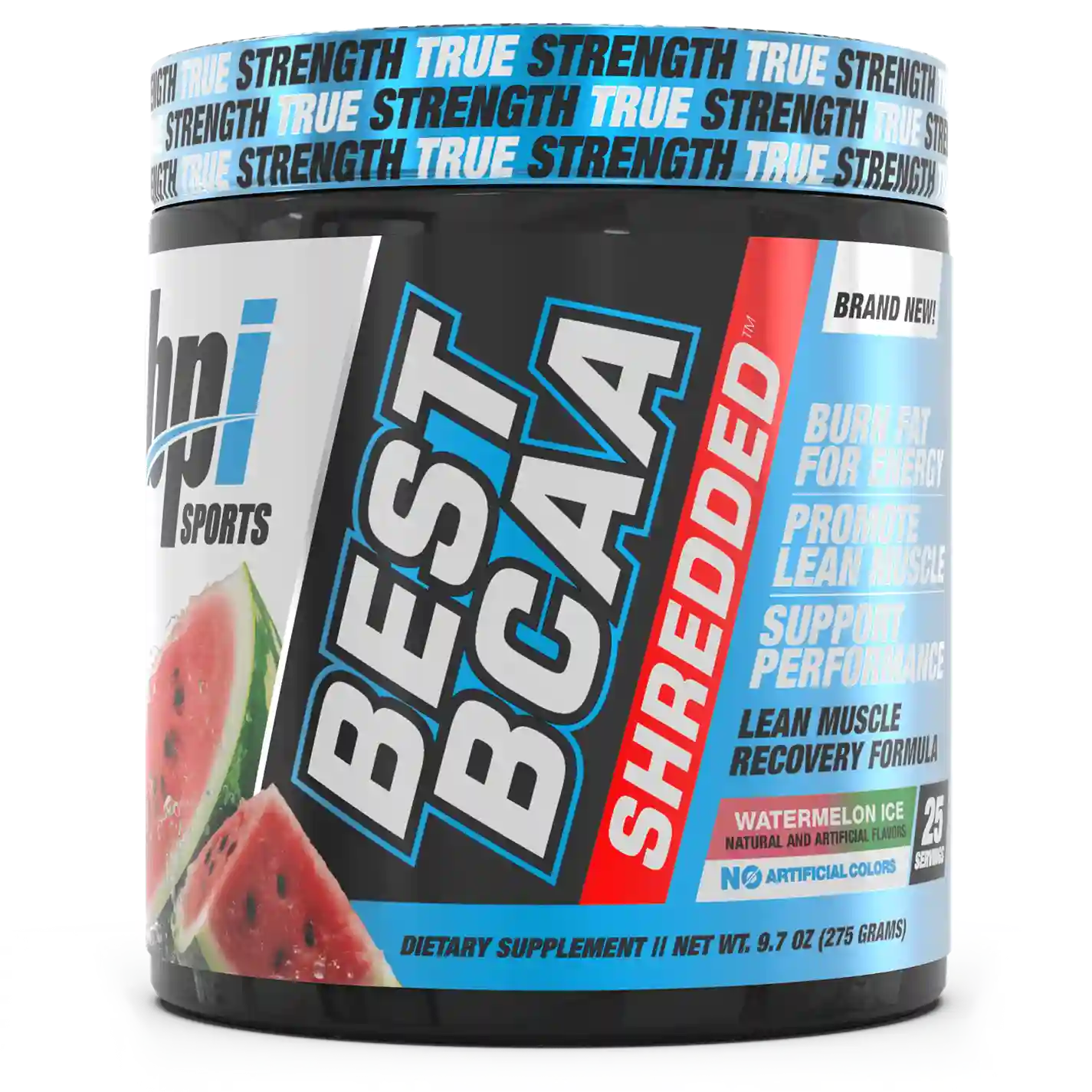
If you want BCAAs: Best BCAA™ delivers leucine, isoleucine, and valine in a research-backed 2:1:1 ratio with added oligopeptide-bonded amino acids for enhanced uptake. It's a solid choice if you're training in a fed state with good daily protein and want intra-workout support.
If you want EAAs: Best EAA™ provides all nine essential amino acids in one serving, including a leucine-dominant BCAA profile plus the full spectrum of remaining EAAs. It's the more complete option and the better choice if you're training fasted, in a deficit, or want to cover more nutritional ground with one product.
The Short Answer
Choose EAAs if you want the most complete amino acid coverage, train in a caloric deficit, or want one product that covers all your bases.
Choose BCAAs if your protein intake is already on point, you prefer a lighter intra-workout formula, or you're focused more on anti-catabolism during longer sessions.
Either way, the fundamentals of total daily protein, consistent training, and sleep will do more for your muscle growth than any amino acid supplement. These products support the process — they don't replace it.