

Creatine is the most researched supplement in sports nutrition history. It works. That part isn't up for debate. What is debated — endlessly, in gym locker rooms and Reddit threads — is how to take it.
Do you need to load it? Does timing matter? Should you cycle off? Here's what the science actually says, without the noise.
What Is Creatine and Why Does It Work?
Creatine is a naturally occurring compound stored in your muscle cells as phosphocreatine. When you do explosive, high-intensity work — a heavy squat, a sprint, a max-effort set — your body burns through ATP (adenosine triphosphate) faster than it can produce it. Phosphocreatine donates a phosphate group to regenerate ATP on the spot.
Supplementing with creatine saturates your muscle stores beyond what diet alone achieves. More phosphocreatine means more ATP available, which translates to more reps, more power output, and better recovery between hard sets. Over time, that adds up to real strength and muscle gains.
The research is consistent: creatine monohydrate increases strength, power, sprint performance, and lean mass. It also has emerging evidence for cognitive benefits and neurological health. Few supplements can say that.
Creatine Loading Phase: Do You Actually Need It?
The loading protocol — 20 grams per day split into four 5-gram doses for 5–7 days — became popular because it saturates your muscles faster. Studies show loading gets you to full saturation in about a week versus 3–4 weeks at a standard dose.
But here's the thing: both approaches get you to the same place.
If you're preparing for a competition or want results as fast as possible, loading makes sense. If you're playing a long game and building for months, loading offers no meaningful advantage. You'll hit the same saturation levels whether you rush there in a week or take four weeks at 3–5 grams per day.
One legitimate downside to loading: some people experience stomach discomfort or bloating at high doses. If your GI system doesn't love the loading protocol, skip it. There's no performance penalty for the slower approach.
The Standard Creatine Dose
For maintenance — or as your only dose if you're skipping the loading phase — 3–5 grams of creatine monohydrate per day is the well-established, research-backed amount.
Larger doses above 5 grams per day are not better. Your muscles can only store so much creatine, and excess is excreted. This is where "more is more" thinking doesn't apply.
Body weight adjustments are sometimes suggested (0.03g per kg of body weight), but for most people, a flat 5g is appropriate and simpler to stick to.
When Should You Take Creatine?
Timing is probably the most over-discussed aspect of creatine supplementation. The honest answer: it matters a little, but not nearly as much as simply taking it consistently every day.
That said, research does point to a slight advantage for taking creatine close to your workout — either pre or post. A 2013 study in the Journal of the International Society of Sports Nutrition found that post-workout creatine supplementation produced slightly greater lean mass and strength gains compared to pre-workout timing, though the difference was modest.
The practical takeaway:
- Take it post-workout on training days if you want to optimize for timing
- Take it any time with food on rest days
- Stack it with a carbohydrate source — carbs spike insulin, which improves creatine uptake into muscle cells
- If you'll forget it unless you tie it to another habit, tie it to your protein shake and stop overthinking it
Should You Cycle Off Creatine?
No. There is no evidence that cycling creatine provides any benefit. The concern — that your body will "forget" how to produce creatine naturally — doesn't hold up. Your endogenous creatine synthesis returns to baseline quickly when you stop supplementing.
Creatine is not hormonal. It doesn't suppress any system that requires periodic breaks. Long-term creatine use in healthy individuals has been studied extensively and consistently shows it to be safe.
Take it daily, indefinitely, at 3–5 grams. That's it.
Does Creatine Cause Water Retention?
Creatine does pull water into muscle cells — this is part of how it works and is intracellular, not the subcutaneous "puffy" water retention people associate with excess sodium or poor diet. The scale number may tick up 1–2 pounds when you first start, but this is lean mass (hydrated muscle), not fat or cosmetic bloat.
People who train hard and want to look lean can use creatine without concern. The water goes into the muscle, not under the skin.
What Type of Creatine Should You Take?
Creatine monohydrate. Full stop.
Dozens of creatine variants have been marketed — creatine HCl, creatine ethyl ester, buffered creatine, creatine malate, and more. None have demonstrated superiority over monohydrate in head-to-head research. Monohydrate is the form used in virtually all the clinical trials, it's the most bioavailable, and it's the most cost-effective.
The one legitimate consideration is purity. Look for creatine monohydrate that is unflavored, fine-milled (micronized mixes better), and free of unnecessary fillers.
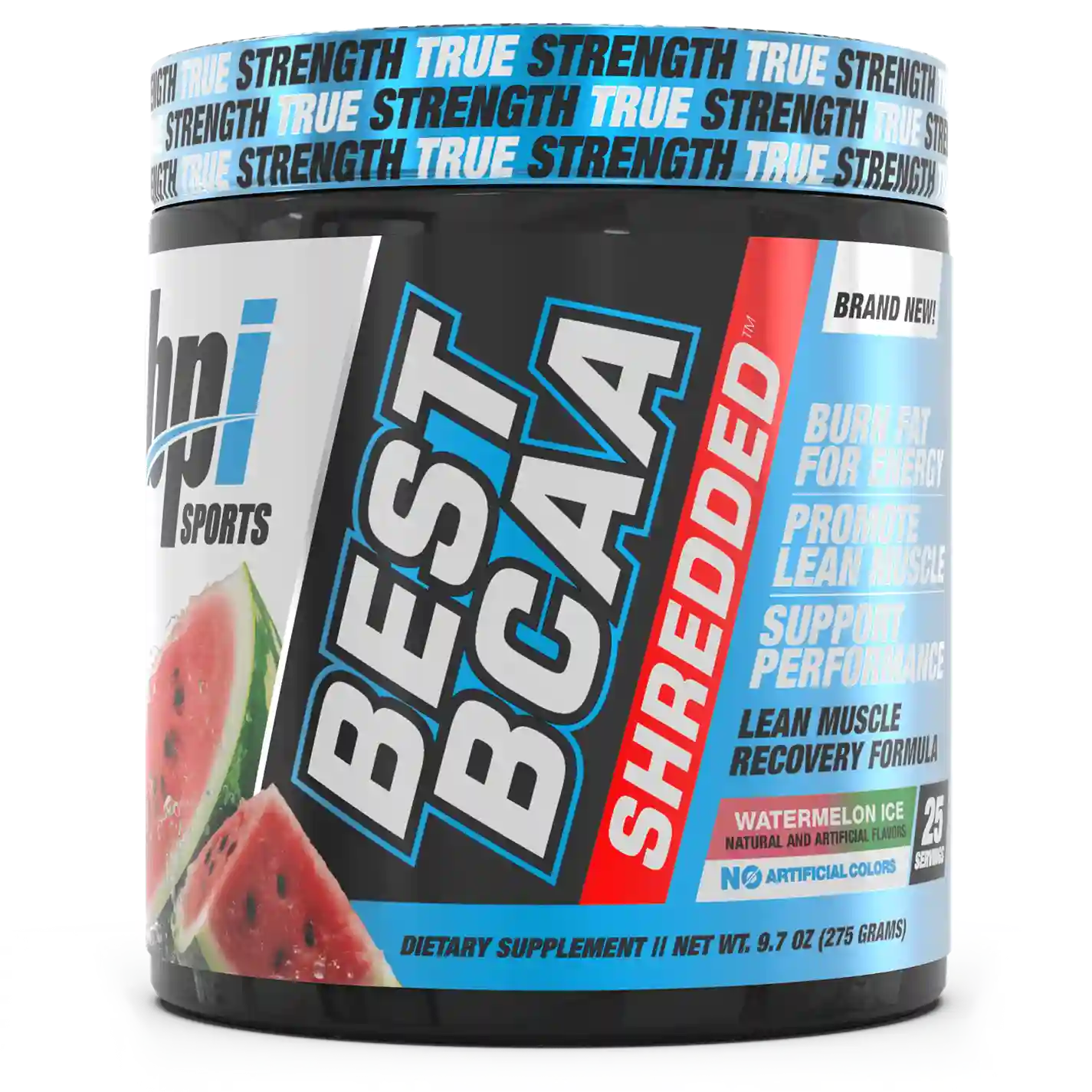
Best Creatine™ by BPI Sports is pure creatine monohydrate — nothing added, nothing masked. It mixes clean, dissolves fully, and delivers exactly 5 grams per serving. No proprietary blends, no artificial colors, no unnecessary ingredients between you and the creatine.
The Simple Protocol That Works
Here's what the research supports, distilled:
- Start with 5g per day (skip loading unless you have a reason to rush)
- Take it daily, including rest days
- Pair it with carbs for better uptake
- Don't cycle off
- Stay consistent — it takes 3–4 weeks to fully saturate at 5g/day
Creatine is not a supplement that rewards complexity. It rewards consistency. Take it every day, train hard, and let the months do the work.
Try Best Creatine™ — pure creatine monohydrate, nothing else →